Tanglangquan — The Praying Mantis Style
Tanglangquan is the northern Chinese Praying Mantis style — born from observing an insect, built on lightning-fast hooking techniques and monkey footwork.
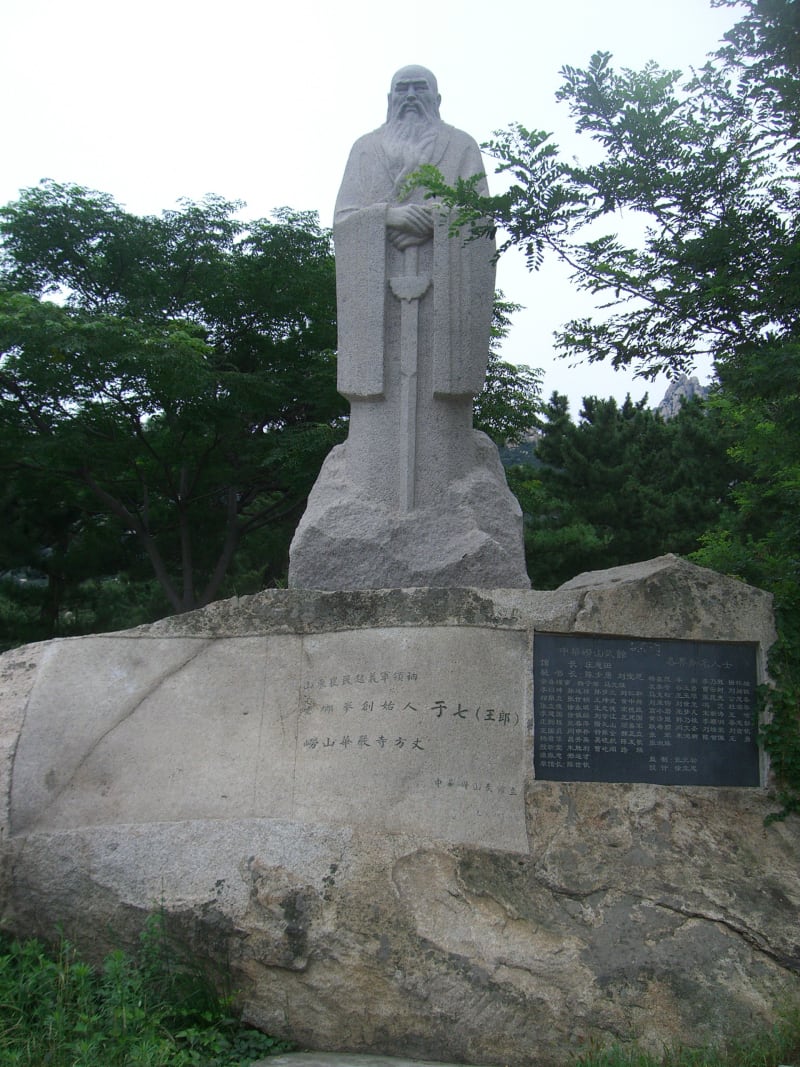
Lineage
Contents
Tanglangquan (螳螂拳, “Praying Mantis Fist”) is one of the most sophisticated and distinctive animal styles of northern Chinese Kung Fu. The name is its program: the lightning-fast, grasping hook movements of the praying mantis form the technical language of the hands — combined with the nimble, deceptive footwork of the monkey (Hou Bu). This combination makes Tanglangquan one of China’s most technically rich martial arts. The art arose according to tradition in the late Ming dynasty period, when the fighter Wang Lang, after repeated defeats at the Shaolin Temple, observed a fight between a praying mantis and a cicada — and recognized in the dramatic underdog victory of the small insect against a larger creature a combat strategy: speed, precise response, relentless grip. Tanglangquan is today divided into several main schools: Seven Star, Eight Steps, Six Harmony, and Plum Blossom — each with its own character, all built on Wang Lang’s foundational structure.
History and Legend
Wang Lang (王朗) — historically barely traceable, rich in tradition. Most sources place him in the late Ming or early Qing dynasty (~1650), some in the Song dynasty (960–1279). The most significant version:
Wang Lang was a martial artist training at the Shaolin Temple, but despite intensive practice he lost fight after fight. Despairing, he wandered through the mountains of Shandong when he observed an unusual fight: a praying mantis defended itself against a much larger cicada — its forelegs hooking so fast and precisely that the cicada had no chance.
Wang Lang captured the praying mantis, built a cage, and studied its movements for weeks with chopsticks. He then transferred the foreleg mechanics to human combat techniques and combined them with the nimble footwork of the monkey (also studied from nature). The result was a fundamentally new martial art, with which he defeated all previous opponents on his return.
Historically confirmed is that Tanglangquan is documented from the 18th century onward in Shandong Province (particularly around Yantai and Laiyang) and spread from there.
Fan Xudong (范旭东, 1875–1935) from Yantai was the first “King of Mantis Boxing” — he systematized the Seven Star style and trained generations of masters who spread Tanglangquan throughout China and internationally.
Technical Foundations
Wang Lang established a technical framework shared by all Tanglangquan branches:
| Category | Content |
|---|---|
| 8 Stances (Ba Gong Bu) | Fundamental positions |
| 12 Key Words (Shi Er Zi Jue) | Core technical principles |
| 8 Hard Methods (Ba Gang) | Powerful direct techniques |
| 12 Soft Methods (Shi Er Rou) | Flowing redirection techniques |
| 5 External Elements | Physical training aspects |
| 5 Internal Elements | Mental training aspects |
The characteristic Praying Mantis Hooks (Tang Lang Gou, 螳螂钩):
- Wrist bent, fingers together
- Serve simultaneously as deflection (catching hook) and attack (hook strike)
- Lightning-fast sequences of hook-grasp-strike
Core Techniques
Shuang Feng Guan Er (双风贯耳) — Double Wind Pierces the Ears: simultaneous bilateral strike to both sides of the head — one of Tanglangquan’s most famous techniques.
Luo Han Gong — Arhat exercises: foundational strength and conditioning specific to Tanglangquan.
Footwork (Hou Bu): Borrowed from the monkey — fast, unpredictable, deceptive. The fighter switches direction in a flash, makes themselves compact and aggressive. The footwork is so characteristic that Tanglangquan is incomplete without Hou Bu.
Zhan Shou (粘手) — Sticky Hand training: similar to Taijiquan’s Push Hands, develops sensitivity to the opponent’s intent.
Philosophy
Tanglangquan teaches through the animal: the praying mantis wins not through size, but through precision, reaction speed, and inexhaustible attack chains. That is the combat principle: who reacts faster and continues without pause wins — regardless of body size.
“The praying mantis does not fear the cicada. It sees it, it acts, it hits. No hesitation.” — Tanglangquan teaching tradition
Nature as teacher is a central concept in Chinese animal styles — the animal has perfected its combat technique through millions of years of evolution. The human can imitate this perfection and make it their own.
Main Styles
| Style | Chinese | Distinctive Feature |
|---|---|---|
| Qixing Tanglang (Seven Star) | 七星螳螂 | Most famous style, agility + directness |
| Babu Tanglang (Eight Steps) | 八步螳螂 | Body power + stepping work emphasized |
| Liuhe Tanglang (Six Harmony) | 六合螳螂 | Softer, inner force integrated |
| Meihua Tanglang (Plum Blossom) | 梅花螳螂 | Elegant, many directional changes |
| Taiji Tanglang | 太极螳螂 | Tanglangquan with Taijiquan principles |
Connections to Other Martial Arts
- Shaolin Kung Fu — Tanglangquan reportedly arose at the Shaolin Temple; Wang Lang’s foundational techniques stem from the Shaolin heritage
- Bajiquan — both are northern Chinese martial arts; some masters learned both systems
- Wing Chun — structurally distantly related: both emphasize close range, fast hand techniques, chain strikes; Wing Chun is however southern Chinese
- Xingyiquan — also uses animal forms (12 animals); Xingyi animals are slower and power-focused, Tanglang insects fast and precise
Today
Tanglangquan is practiced today primarily in Shandong (home province), Liaoning, Hebei, and internationally through Chinese diaspora communities. Seven Star and Eight Steps styles are most widely spread.
In modern Wushu competition, Tanglangquan appears as an independent category — with stylized choreography showing the characteristic hooks and rapid footwork.
Criticism: Like all traditional animal styles, Tanglangquan has faced hard questions about combat effectiveness in the MMA era. Proponents argue that the short, explosive chain technique and wrist hooks are practically usable in clinch situations.
Related Articles
- Kung Fu & Wushu
- Bajiquan
- Xingyiquan
- Budo
- Changquan — how narrow the selection was from which competition changquan emerged in 1958