Zui Quan — The Drunken Fist
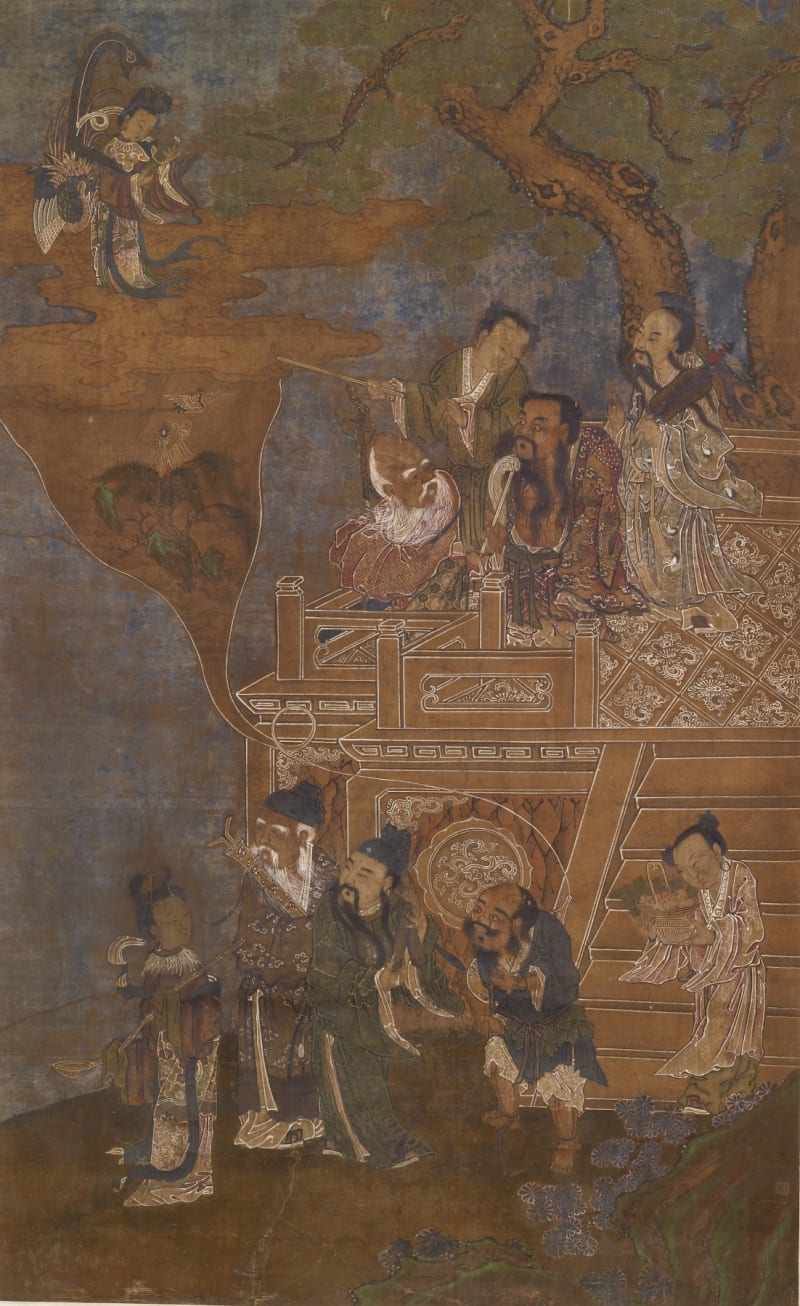
Zui Quan is the staggering, unpredictable style of the Drunken Fist — one of China's oldest combat styles, inspired by the Eight Taoist Immortals, made famous by Jackie Chan.
Lineage
Origins
Contents
Zui Quan (醉拳, “Drunken Fist” or “Drunken Boxing”) is one of China’s most extraordinary combat styles — and visually one of the most instantly recognizable. The fighter staggers, sways, almost falls to the ground, stumbles forward — and strikes with devastating precision. Zui Quan imitates the movements of a drunk person: uncertain, arrhythmic, unpredictable. This apparent incoherence is the system’s strength. An opponent can barely read or anticipate Zui Quan movements — the irregular dynamic breaks all patterns that other fighting styles train. The art combines strikes, grappling, ground and aerial fighting, joint locks, and deception into a system that ranks among the most complex and physically demanding martial arts in China. Two traditions feed Zui Quan: the Buddhist Shaolin lineage and the Taoist lineage of the Eight Immortals. The most famous cultural reference: Wu Song from the classic Shuihu Zhuan (Water Margin), who defeats his enemy in a drunken state.
History
The earliest written mention of a “Drunken Boxing strategy” appears in the novel Shuihu Zhuan (水浒传, “Water Margin,” also known as Outlaws of the Marsh) — a Chinese classic from the Ming dynasty (~14th–16th century). The character Wu Song practices “Drunken Boxing” and defeats opponents in unconventional ways.
Historically, Zui Quan is difficult to date — written transmissions were lacking. The art was traditionally passed orally and through direct training. Two main lineages emerged:
Buddhist Lineage (Shaolin tradition): Zui Quan as one of many animal forms and specialty styles of the Shaolin monastery. The Shaolin style emphasizes strength and explosive force within the staggering movements.
Taoist Lineage (Eight Immortals): The branch best known in popular culture — each of the Eight Taoist Immortals (Ba Xian, 八仙) represents a different aspect of “Drunken” combat.
In modern consciousness, Zui Quan became world-famous through Jackie Chan’s film “The Drunken Master” (醉拳, 1978) — though the film dramatically simplifies and exaggerates Zui Quan.
The Eight Drunken Immortals
Each technique in the classical Zui Quan set embodies one of the Eight Immortals:
| Immortal | Technique Character |
|---|---|
| Lu Dongbin | Inner strength, even strikes |
| Li Tieguai (Cripple Li) | Strong right leg, ground techniques |
| Zhongli Quan (Fat Han) | Embracing grappling techniques, body mass |
| Lan Caihe | Hip attacks, rotation-force based |
| Zhang Guolao | Fast double kicks |
| Cao Guojiu | Choke techniques, throat attacks |
| Han Xiangzi (Flute Player) | Wrist techniques, precision strikes |
| He Xiangu (Miss He) | Deceptive feminine movements, body mimicry |
Technical Foundations
Zui Quan is technically extraordinarily demanding:
Body work: Staggering, swaying, and apparent falling are controlled techniques — the body moves along paths that conventional training does not provide for. Strong joints, especially wrists and fingers, are prerequisites.
Power generation: Force is generated from unusual positions — lying down, staggering, almost falling. This requires extraordinary body control.
| Technique Category | Content |
|---|---|
| Striking (Jiji) | Fists, hand edges, elbows in staggering motion |
| Kicking (Tiji) | Foot kicks from low or unexpected angles |
| Grappling (Zhuazhi) | Grabbing and levering from the stagger |
| Ground fighting (Ditu) | Fighting from lying or sitting position |
| Aerial work (Tengkong) | Jumps and rotations in Drunken mode |
Core Techniques
Ginga-like base (but Chinese): constant weight shifting makes the body a moving target.
Falling as attack: the apparent fall ends with a ground kick or ground lever — the opponent expects to see a falling man, receives instead a kick to the face.
Deception through expression: the Zui Quan fighter simulates drunkenness in the face too — glazed eyes, exaggerated movements — to amplify the psychological effect.
Philosophy
Zui Quan is deeply rooted in Taoism. The idea of apparent weakness as strength, disorder as hidden order, loss of control as the highest form of control — these are Taoist core concepts.
The Wu Wei principle (無為, “Non-action”): surrendering to natural flow, not fighting against it — in Zui Quan: not forcing control, but gaining control through letting go.
“The drunkard does not fall because he is intoxicated. He falls because he wants to — and hits your jaw in the process.” — Zui Quan teaching maxim
Connections to Other Martial Arts
- Shaolin Kung Fu — Zui Quan is a specialty style within the Shaolin tradition
- Taijiquan — both share the principle of unexpected, non-linear movement; Zui Quan is the external, explosive version
- Capoeira — structurally distantly related: both use movement unpredictability and physical deception as strategic tools
Today
Zui Quan is taught in specialized Kung Fu schools and featured in modern Wushu competition as a visually spectacular category. Training time to mastery is considered among the longest in Chinese Kung Fu — physical coordination, strength, and conditioning must be extraordinary.
Jackie Chan’s films made Zui Quan world-famous — but also mythologized it. Real Zui Quan practice is far slower and more careful than the film choreographies.