Bando — Myanmar's Animal Style Martial Art
Bando is Myanmar's traditional unarmed combat system — with nine animal styles, strong defensive philosophy, and a history reaching back to the Pagan Empire of the 11th century.
Lineage
Origins
Contents
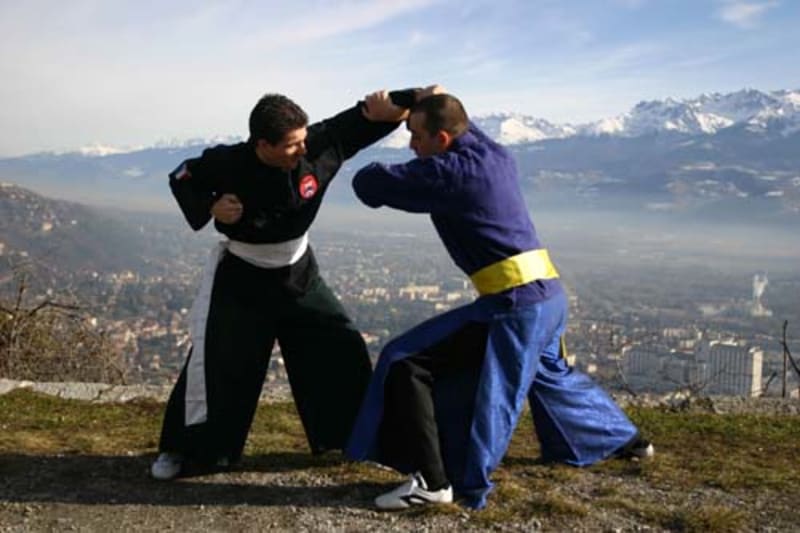
Bando (ဗန္တိုး) is Myanmar’s traditional unarmed combat system — part of the comprehensive Burmese martial arts term Thaing (all Burmese martial arts together, similar to “Budo” in Japan). While Lethwei is Myanmar’s striking sport, Bando is the defensive, animal style-based system. The art is based on the imitation of nine animals — each representing a specific combat quality: the bull for strength, the cobra for precision, the tiger for aggressive control. Bando has a very strong defensive philosophy: offensive techniques are taught only in the third training phase — first one learns to block, then to parry, then to attack. This sequence is not accidental but philosophically grounded: Bando teaches that a fighter must first possess complete defensive competence before earning the right to attack. Today Bando is taught primarily in Myanmar, the USA (through Maung Gyi’s work), and the United Kingdom.
History
Pagan Empire and Early Development (11th–13th century)
Bando reportedly has roots in the Pagan Empire (1044–1287) — the first great Burmese kingdom. Monasteries and noble courts maintained martial arts initially imported from India and China and then independently developed.
Animal style martial arts — with movement patterns of various animals — likely came to Myanmar through Indian and Chinese influence.
Burmese-Siamese Wars (16th–18th century)
The prolonged conflicts with Siam (Thailand) sharpened Burmese martial arts into practical war techniques. Bando became an integral part of warrior training.
Modern Systematization (1940s–1960s)
Ba Than Gyi — after World War II Director of Physical Education for the Union of Burma — collected the various regional Bando styles and united them into a unified system: Hanthawaddy Bando.
His son Maung Gyi brought Bando to Washington D.C. in the early 1960s and taught it on the American East Coast — the first systematic Western dissemination.
The Nine Animal Styles
| Animal | Qualities | Emphasis |
|---|---|---|
| Bull | Strength, charging attack | Full body force |
| Boar | Endurance, persistence | Never give up |
| Cobra | Precision, vital points | Delayed effect |
| Viper | Flexibility, speed | Agility |
| Python | Choking, wrapping | Control and pressure |
| Panther | Agility, evasion | Fast direction changes |
| Tiger | Gripping force, dominance | Aggressive control |
| Scorpion | Vital points, poison attacks | Targeted strikes |
| Eagle | Overview, reach | Distance control |
Training Structure — The Three Phases
Phase 1 — Blocking techniques: Months of pure defense. No attack, only blocks and deflections. The student learns to receive every attack.
Phase 2 — Parrying: Soft, redirecting defenses. The block becomes flowing.
Phase 3 — Offensive techniques: Only now are attacks taught — based on the principle that every offense arises from a perfect defense.
Core Techniques
Strikes and kicks: Bando uses punches, elbows, knee strikes and kicks — but always as the continuation of a defence.
Grappling: throws, joint locks and ground control out of the animal-style tradition.
Weapons (Bando includes weapon work as well): staff · sword · knife — parallel to Lethwei and Thaing.
Philosophy
“First learn not to be hit. Then learn not to hit. When you have mastered both, the fight is already decided.” — Bando tradition
The defensive philosophy is not cowardice — it is respect: the student has no right to strike before he has earned the right to defend safely.
Connections to Other Martial Arts
- Lethwei — both are Burmese martial arts; Lethwei is the offensively explosive striking combat, Bando the defensive complete system
- Pencak Silat — both are Southeast Asian martial arts with animal styles and spiritual foundation
- Muay Boran — Thai counterpart; also a historical combat system with a modern successor
Today
Bando is taught in Myanmar, the USA, and the United Kingdom. The American Bando Association (founded by Maung Gyi) is the largest Western organization. In Myanmar, Bando is part of the national sports heritage.
Related Articles
- Lethwei
- Muay Boran
- Pencak Silat
- Naban — Burmese wrestling, the grappling side of the same tradition
- Thang-Ta — the Indian neighbour to the north-east, with written sources and a dated ban