Bokator — Cambodia's Millennial Warrior Art
Bokator is Cambodia's oldest warrior martial art — documented for 1000 years in Angkor temple bas-reliefs, nearly extinguished by the Khmer Rouge, UNESCO World Heritage since 2022.
Contents
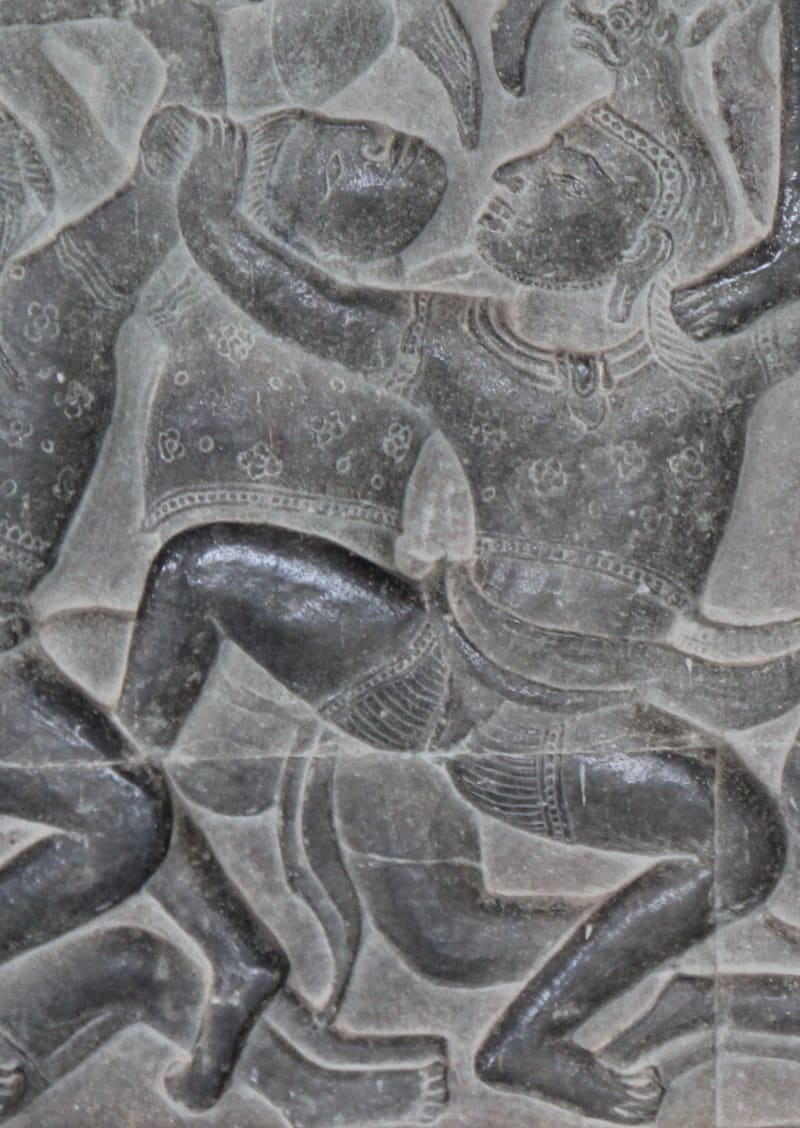
Bokator (ប្រហាររំដោះ, Kun Lbokator — “art of crushing the lion”) is Cambodia’s oldest documented martial art — and one of the oldest in the world. The name means “the art of striking the lion” — a metaphor for defeating a superior opponent. Bokator is carved in stone: hundreds of bas-reliefs in the temples of the Angkor complex (especially the Bayon temple) show fighters in specific Bokator techniques — arm locks, neck locks, knee strikes — dated to the 9th–12th centuries. This makes Bokator one of the few martial arts in the world with direct archaeological evidence of its techniques from over a thousand years ago. This heritage nearly vanished forever: The Khmer Rouge (1975–1979) systematically murdered all Bokator masters as part of their erasure of cultural heritage. Only a few masters survived. San Kim Sean — the most significant surviving master — began the painstaking rebirth of the art after the genocide ended. In 2022 UNESCO recognized Bokator as Intangible Cultural Heritage of Humanity.
History
Khmer Empire and Angkor Flourishing (9th–15th century)
Bokator is said to be even older than the Angkor Empire — oral traditions speak of combat systems already used before the founding of Angkor in the 9th century. As the Khmer kings built the mightiest empire in Southeast Asia, Bokator became the combat system of their warriors.
The Bayon temple reliefs (12th century) are the most important archaeological evidence: dozens of fighter pairs in precise combat positions — arm locks, neck locks, knee strikes, throws — carved in stone, as if an illustrated combat catalog.
Colonial Period and Decline
Under French colonial rule (1863–1953) and after it, Bokator fell into obscurity — displaced by more modern combat sports and the influence of Western sporting culture. The system survived in small circles of masters.
Khmer Rouge — Near-Extermination (1975–1979)
Pol Pot’s regime systematically murdered intellectuals, artists, and holders of cultural knowledge — including nearly all Bokator masters. Only a few escaped to Thailand or other countries. A millennium of combat knowledge stood at the brink of total loss.
The Rebirth — San Kim Sean
San Kim Sean — Bokator master and survivor — fled to the USA and worked for decades to gather, document, and systematize the traditions. He returned to Cambodia and founded the National Bokator Federation. In 2022 Bokator was recognized by UNESCO.
Technical Foundations
Bokator is a complete combat system:
| Area | Techniques |
|---|---|
| Strikes | Elbows, knees, shins, fists |
| Kicks | Kick combinations, spinning kicks |
| Wrestling | Throws, takedowns, ground fighting |
| Submissions | Arm locks, neck locks (depicted in Angkor) |
| Weapons | Bamboo staff, short sword, mace |
Animal styles — similar to Bando and Baguazhang: Tiger · Eagle · Horse · Naga (serpent dragon) · Monkey
Philosophy
Bokator carries the spiritual dimension of Khmer culture — connected to Hinduism and Buddhism, which were united in the Angkor Empire. The temple representations show Bokator not only as martial art but as sacred practice.
“I and my family have sacrificed a lot for martial arts to maintain it for upcoming generations.” — San Kim Sean
Connections to Other Martial Arts
- Muay Boran — geographically close development; both arose as military combat systems of Southeast Asia; technical parallels (knees, elbows)
- Pencak Silat — Southeast Asian sister art
- Bando — Myanmar’s counterpart with animal styles
Today
Bokator is taught in Cambodia in growing schools. The 2022 UNESCO status has enormously increased international interest. The system struggles with the aftermath of genocide — knowledge is fragmentary, masters are few.