Systema — The Russian Martial Art of Breath
Systema is Russia's mysterious special-forces martial art — based on breath control, total body relaxation, and the principle of using the opponent's force against themselves.
Lineage
Origins
Contents
Systema (Система, “The System”) is the Russian martial art — one of the most mysterious and fascinating modern combat arts, developed in Soviet and Russian special forces and only made accessible to the public after the USSR’s collapse in the 1990s. Systema differs fundamentally from other martial arts: no fixed techniques, no Kata, no standardized movement sequences. Instead Systema rests on four pillars: breath control, relaxation, posture, and movement. The conviction: when breath, body, and mind are in perfect relaxation and coherence, natural combat effectiveness arises — automatically, situation-adapted, without pre-programming. The central teaching figure of modern Systema was Mikhail Ryabko (1961–2023), former commander of Russian special forces units. Vladimir Vasiliev founded the first Systema school outside Russia in Toronto in 1993 and brought the art to international attention.
History
Historical Roots (legendary)
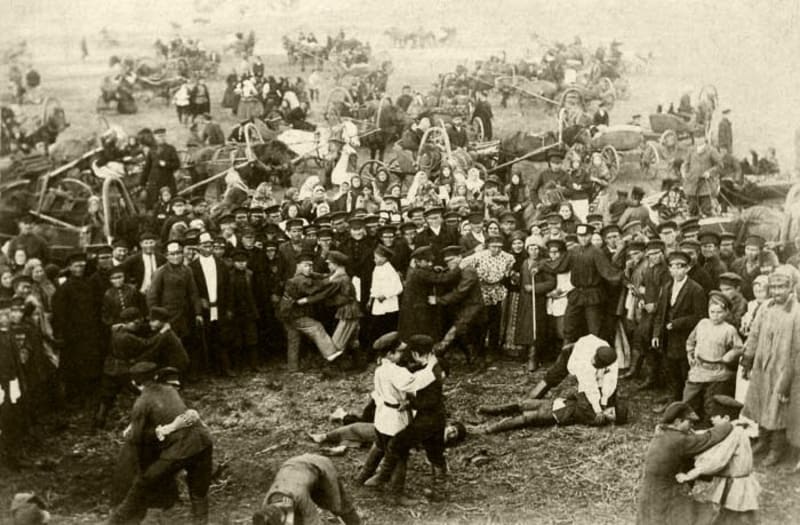
Systema proponents trace roots to Cossack combat techniques of the 10th century and battles of Slavic warriors (Bogatyrs). This tradition is difficult to historically verify — but the idea of a Russian combat system beyond conventional techniques has authentic cultural roots.
Soviet Development (Cold War)
The key moment: during the Cold War, Aleksey Kadochnikov — Soviet Army officer and biomechanics engineer — developed a systematic close-combat system for Soviet special forces. Kadochnikov analyzed human biomechanics, leverage, and physics principles and integrated them into a unique combat system based on using the opponent’s force.
The system remained strictly secret — part of Soviet special operations training.
Public Phase (1993–present)
After the USSR’s collapse, Systema opened to the world:
- Vladimir Vasiliev founded the first school outside Russia in Toronto in 1993 — the global base of the Vasiliev lineage
- Mikhail Ryabko began teaching in Moscow and giving seminars worldwide
Ryabko’s background is remarkable: he began training at age 5 under a member of “Stalin’s Falcons” (elite Soviet leader bodyguard unit), was conscripted into the Russian army at 15, and served in special operations units.
Four Pillars of Systema
| Pillar | Russian | Description |
|---|---|---|
| Breath control | Dykhanie (Дыхание) | Breath as foundation of every movement and mental control |
| Relaxation | Rasslableniye (Расслабление) | Total muscle relaxation — no tension wastes energy |
| Posture | Forma (Форма) | Natural body alignment for maximum efficiency |
| Movement | Dvizheniye (Движение) | Flowing, adaptive movement without pattern |
Breathing — The Heart of the System
Systema’s breathing principle is unique among martial arts:
Fundamental rule: never hold the breath. Fear, shock, and pain automatically cause breath-holding — Systema trains to overcome this.
Four breath movements:
- Inhale through the nose — calm and control
- Exhale through the mouth — power expression
- Apnea after inhalation — compression strength
- Apnea after exhalation — deepest relaxation and awareness
By controlling breath in extreme situations (pain, attack, surprise) the mind remains clear and the body responsive.
Core Techniques
Systema has no fixed techniques — every situation requires its own response. Training principles:
- Strikes (Удары) — strikes that address the opponent’s internal states, not only creating pain
- Groundwork — fighting in all positions, standing to lying
- Knife work — knife defense and handling
- Mass scenarios — training against multiple opponents under stress
- Psychological work — working with fear, surprise, and mental limits
Philosophy
Systema is deeply spiritual — Russian Orthodox Christian in Ryabko’s lineage. The core concept: martial art as path of self-knowledge.
The perfect Systema practitioner is relaxed, friendly, and appearing harmless — while being fully present and responsive. This quality — alertness without tension — is the highest goal.
“Do not break the person; break his desire to attack you.” — Mikhail Ryabko
Connections to Other Martial Arts
- Sambo — Russian grappling counterpart; Sambo is competition-oriented and rule-bound, Systema rule-free and principle-based
- Krav Maga — both military combat systems; Krav is explosively aggressive, Systema fluidly adaptive
- Aikido — philosophical kinship (yielding, redirecting force, movement), different cultural origin
- Taijiquan — parallel principles (relaxation, inner force, flowing movement) — independently developed
Today
Systema is taught in over 40 countries. The two main lineages (Ryabko/Vasiliev and Kadochnikov) have different emphases. Critics note lack of verification in genuine combat — Systema demonstrations often appear choreographed.
Related Articles
- Sambo
- Krav Maga
- Ki, Chi & Prana
- Budo
- Breathing Methods Compared — never hold — a deliberate decision against intra-abdominal pressure
- Breathing Programme — never hold — as a programme with calibration rather than a maxim
- Qigong — the other major regulation tradition — arrived at independently