Grappling
Wrestling, throwing, holding — ground arts of the world.
16 articles

Brazil ·1925 (first Gracie academy); development through 1950s
Brazilian Jiu-Jitsu — The Art of Ground Fighting
Brazilian Jiu-Jitsu is the martial art of ground fighting — brought to Brazil by Mitsuyo Maeda, perfected by the Gracie family, immortalized by Royce Gracie at the first UFC.

England (Lancashire) ·Early 19th century; codified ~1870s
Catch Wrestling — British Wrestling with Submissions
Catch Wrestling is brutal British wrestling of the 19th century — with submissions, leg locks, neck cranks, and the legendary Snake Pit in Wigan as its world center.
Philippines (Visayas, Mindanao) ·Pre-colonial; practiced since ancient Philippine times
Dumog — Filipino Ground Grappling
Dumog is traditional Filipino grappling — born as a carabao-wrestling technique, close sibling of Escrima, focused on control points and balance disruption.

England (Lancashire) and the USA ·early 19th century; Olympic since 1904
Freestyle Wrestling — One Rule Apart, a Different Sport
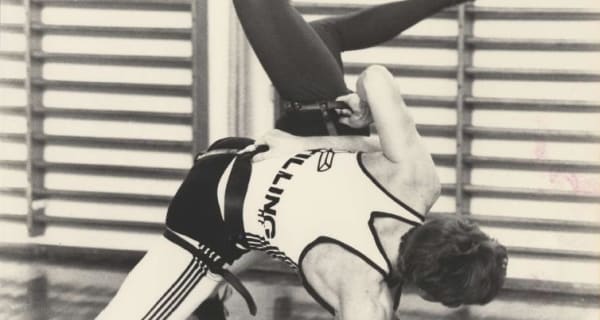
A single rule separates freestyle from Greco-Roman — the grip below the waist. Everything else in both styles follows from it.
Iceland / Scandinavia ·Viking Age (~9th century); first written mention: 1325 (Jónsbók)
Glima — Viking Wrestling from Iceland
Glima is the traditional Scandinavian wrestling of the Vikings — Iceland's national sport since the 9th century, with three variants from elegantly technical to raw free-fight.

France (19th century); ancient inspiration: Greece and Rome ·Mid-19th century, 1848 (France); Olympics since 1896
Greco-Roman Wrestling — Olympics' Oldest Combat Sport
The only wrestling style at the 1896 Athens Olympics and continuously on the programme since 1908 — exclusively upper-body grips and spectacular throws.

Iran (Persia) ·ritual form of the modern era; claims of antiquity are narrative, not evidence
Koshti Pahlevani — the Word Travelled Further Than the Grip
What spread from Iran to India and Turkey was not a grip but a word and a figure: the pahlavan.

Senegal ·Pre-colonial as a harvest contest; striking form from 1924; governing body 1994
Laamb — the National Sport a Cinema Owner Invented
The striking form of Senegalese wrestling goes back to a French cinema owner. It became the national sport all the same.

Brazil ·1928 (Hatem begins training); formalised in the 1950s; flourished 1950s–1990s
Luta Livre — Brazil's Forgotten Grappling Art
Luta Livre is Brazil's no-gi grappling art — the working-class alternative to the elite's BJJ, heir to Catch Wrestling, locked in a legendary rivalry with the Gracie family.

India ·Vedic period (c. 1500–500 BCE); first mentioned in the Rigveda (c. 1500–1200 BCE)
Malla-Yuddha — The Vedic Warrior Wrestling
India's oldest attested wrestling: named in the Rigveda, elaborated in the Ramayana and Mahabharata — and ancestor of Pehlwani.

Myanmar (historically: Burma) ·Pagan Empire (11th century); flourished: Burmese kingdoms (16th–19th century)
Naban — Burmese Grappling
Naban is traditional Burmese grappling — wrestling with joint locks, chokes, and pressure point techniques, a direct descendant of Indian Malla-Yuddha in the Pagan Empire.

India (historically: Mughal Empire) ·Vedic precursors (c. 1500–500 BCE); Pehlwani form: Mughal Empire (16th–17th century)
Pehlwani — India's Sacred Wrestling
Pehlwani is India's traditional wrestling — practiced in earthen pits (Akharas), refined under the Mughal Empire with Persian influence, still today both life philosophy and sport.

Soviet Union / Russia ·1920s–1938 (official recognition)
Sambo — The Soviet Synthesis of Judo and Wrestling
Sambo is Russia's combat sport synthesis — distilled from Judo, wrestling and Soviet folk fighting styles, built by the Red Army, now on the path to Olympic recognition.

Switzerland ·Medieval folk art; Unspunnen festival 1805 as birth of organized form
Schwingen — Traditional Swiss Wrestling
Schwingen is Switzerland's traditional wrestling — alpine herdsman's pastime, formalized since 1805, with sawdust ring and jute breeches, today a national sport drawing 90,000 spectators.
Japan ·1970s (Karl Gotch's Japan influence); 1984 (UWF founding); Shooto 1985
Shoot Wrestling — Japan's Real Submission Wrestling
Shoot Wrestling is Japan's answer to scripted pro wrestling — brought to Japan by Karl Gotch, perfected in the UWF, ancestor of Shooto, Pancrase, and modern MMA.

attested worldwide; modern competitive form Europe and the USA ·Antiquity (Olympic from 708 BCE); modern rules from 1904/1921
Wrestling — The Oldest Form of Combat
Wrestling is the most widely attested form of combat in human history — today Olympic in freestyle and Greco-Roman, and the most effective base for MMA.