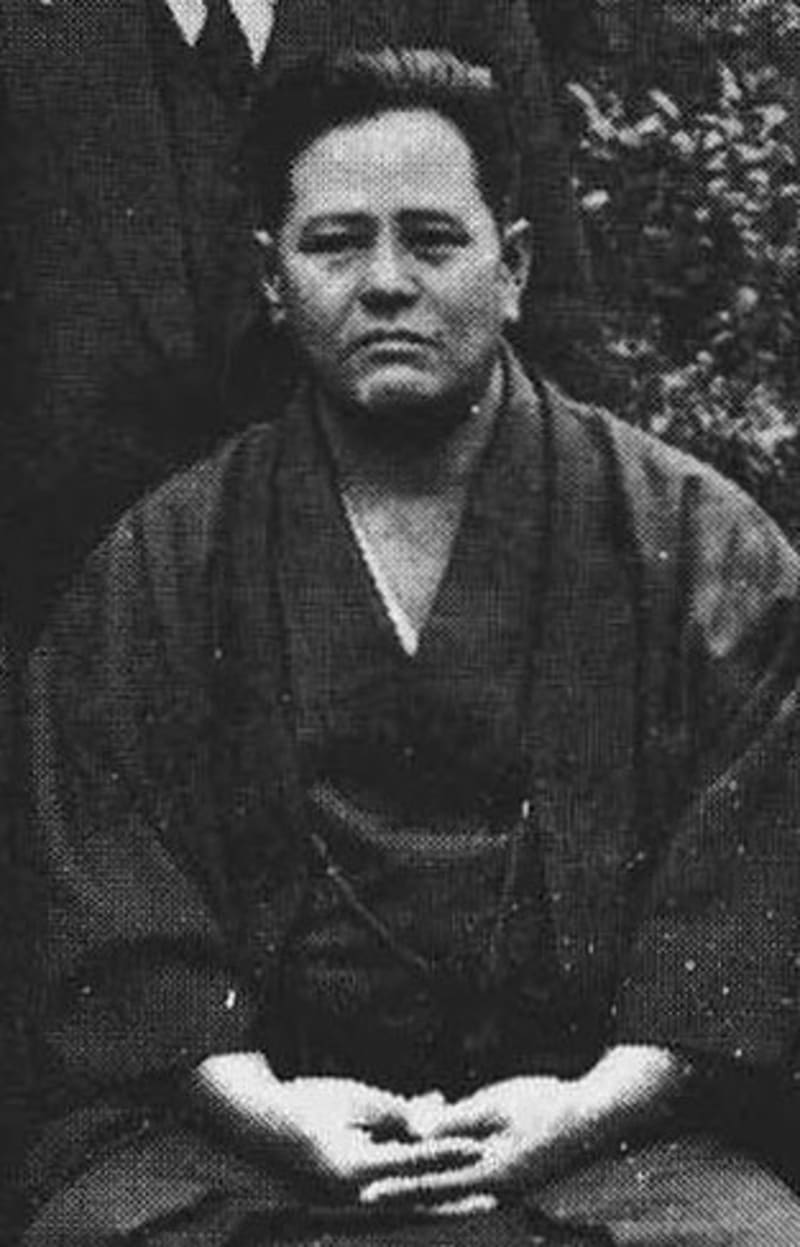
Chojun Miyagi — Founder of Goju-ryu Karate
Chojun Miyagi (1888–1953) fused Okinawan hardness with Chinese softness into Goju-ryu — the karate school that inspired Mr. Miyagi in Karate Kid.
Contents
Overview
Chojun Miyagi is the master whose name became known to millions through Karate Kid (1984) — as the model for the character Mr. Miyagi. The real Miyagi was indeed a quiet, profound Karate master from Okinawa who took the key phrase of his style from an ancient Chinese poem: “Ho wa Gōjū wa Donto su” — the way of inhaling and exhaling is hardness and softness. Goju literally means hard-soft. Miyagi united the explosive power of the Okinawan fighting tradition with the breathing techniques and flowing movements of Chinese Kung Fu — creating one of the world’s most influential Karate styles.
| Birth name | Miyagi Chōjun (宮城長順) |
| Born | April 25, 1888, Naha, Okinawa |
| Died | October 8, 1953, Naha, Okinawa |
| Martial art | Goju-ryu (founder), Naha-te, Chinese Quanfa |
| Teachers | Kanryo Higaonna, Ryuko Arakaki |
| Notable students | Gogen Yamaguchi, Meitoku Yagi, Seiko Higa |
Early Life and Training
Miyagi was born into a wealthy merchant family in Naha. At 11 he began training under Ryuko Arakaki — a master of the local Naha-te tradition. Three years later he was introduced to Kanryo Higaonna, the most significant Naha-te master of his time. Higaonna had himself studied Quanfa in China and brought back a system combining hard and soft elements.
Miyagi became Higaonna’s most dedicated student and, after the master’s death in 1915, took on the task of carrying the heritage forward. But he wanted to understand more deeply: in 1915 he traveled to Fujian, China, to personally research the roots of the system. He studied at two schools — the hard Shaolin line and the softer internal school. The synthesis of these experiences shaped Goju-ryu.
Turning Points
In 1930, Miyagi publicly demonstrated Tensho — a kata he himself had created representing the softness (Ju) within the system. Around this time he officially named his style Goju-ryu — from the line of the Hakku Kenpo poem.
In 1933 he registered Goju-ryu with the Dai Nippon Butokukai (Japan’s highest Karate authority) as an independent school — formally establishing it as one of Japan’s five recognized Karate styles.
In 1934 Miyagi traveled to Hawaii and taught there for nearly a year — an early international spread of the art. He also taught Okinawan police, schools, and military.
He died of a heart attack in 1953 — without having officially named a successor. Several students claimed his legacy.
Techniques and Principles
Goju-ryu uniquely combines hard and soft principles:
| Principle | Description |
|---|---|
| Go (hard) | Explosive techniques, strikes, and punches with full force |
| Ju (soft) | Circular movements, redirecting attacking force |
| Sanchin | Foundation kata — breath control, body tension, rooting |
| Tensho | Soft-hands kata — flowing circular movements |
| Bunkai | Application analysis of each kata sequence |
| Hojo Undo | Traditional conditioning with chiishi (stone weights), nigiri-game |
Sanchin is Goju-ryu’s most important training tool: it teaches breath control, body tension, and mental focus simultaneously. In testing, the teacher strikes the student during performance — to test stability.
Philosophy
Miyagi saw Karate as Do — a path of self-perfection. He emphasized that the teacher-student relationship is a lifetime commitment, not a transaction. His teaching style was direct, without ornamentation — he taught through demonstration, not explanation.
The name Goju is itself a philosophical statement: no fighting style is purely hard or purely soft. True mastery lies in balance — choosing the right response at the right moment.
Students and Legacy
- Gogen Yamaguchi (“The Cat”) — Brought Goju-ryu to Japan and developed it into a modern sport discipline
- Meitoku Yagi — Founded Meibukan, an important Okinawan branch
- Seiko Higa — Preserved the traditional Okinawa lineage
- Eiichi Miyazato — Founded Jundokan Dojo; strongest lineage in Okinawa
Today there are two main lineages: the Okinawan traditional line and the Japanese Goju-kai (Yamaguchi line).
Connections to Other Arts
Goju-ryu shares Okinawan roots with Shotokan (Funakoshi) and Shorin-ryu, but has a much stronger Chinese influence. The intensive training discipline (Sanchin, Hojo Undo) influenced Kyokushin Karate (Mas Oyama trained Goju-ryu). Parallels with Chinese Wing Chun exist in the emphasis on close-range combat and breath work.
Today
Goju-ryu is practiced worldwide and is one of the four main styles recognised by the Japanese umbrella body. The figure of Mr. Miyagi in Karate Kid — a quiet, wise Okinawan master — was explicitly named after Chojun Miyagi and represents the deepest ideal of his philosophy.