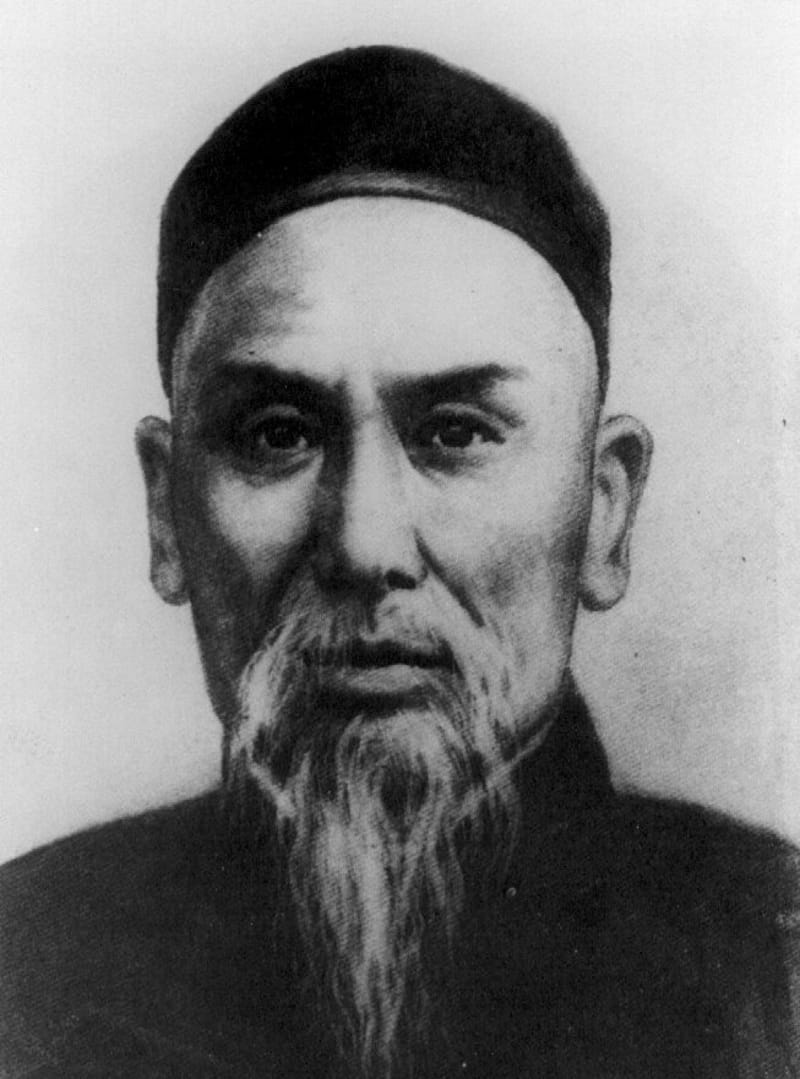
Yang Luchan — The Invincible and Father of Yang-Style Taijiquan
Yang Luchan (1799–1872) spent 18 years secretly learning from the Chen family — and became so superior he entered history as 'Yang the Invincible.'
Contents
Overview
Yang Luchan is one of the most fascinating rise-from-nothing stories in martial arts history. A peasant boy from Hebei who entered the most famous martial arts village in China — Chenjiagou, home of the strictly secret Chen family fighting art. He spent 18 years there, reportedly learning in secret while observing, and returned to defeat every challenger. When he eventually taught at the Imperial Court in Beijing, he had so fundamentally transformed the system that his style — Yang-style Taijiquan — is today the world’s most widely practiced Tai Chi form, with hundreds of millions of practitioners.
| Birth name | Yang Fukui (楊福魁), known as Yang Luchan (楊露禪) |
| Born | 1799, Yongnian County, Hebei, China |
| Died | 1872, Beijing, China |
| Martial art | Yang-style Taijiquan (founder), Chen-style Taijiquan |
| Teacher | Chen Changxing (Chen family, Chenjiagou) |
| Notable students | Yang Banhou (son), Yang Jianhou (son), Wu Quanyou |
Early Life and Training
Yang Luchan grew up in a poor farming family in Yongnian, Hebei. As a child he allegedly witnessed a marketplace fight in which a single man with flowing, seemingly effortless movements repelled several attackers. That fighter was a student of the Chen family system.
Yang became obsessed with learning this art. Since the Chens kept their system secret and taught no outsiders, he traveled to Chenjiagou and worked as a servant in the household of Chen Changxing — then the main teacher of the system. Legend tells that he observed training sessions at night through a hole in the wall and practiced what he saw.
Whether the story is literally true or symbolic — the fact is that Yang Luchan spent 18 years in Chenjiagou and was recognized as a direct student of Chen Changxing. He was the first outsider to whom the Chens passed their complete system.
Turning Points
Back in Yongnian, Yang Luchan was immediately recognized for his superiority. He received challengers from all styles — boxers, wrestlers, specialists from other Kung Fu schools — and remained undefeated. Crucially, he never seriously injured his opponents: he repelled attackers without harming them. This ability — to control the attacker without causing injury — was considered the highest demonstration of the Taijiquan principle.
Around 1850 he was summoned to the Imperial Court in Beijing to teach the imperial guard — an extraordinary honor for a peasant’s son. He received the nickname Yang Wudi — Yang the Invincible.
At the Imperial Court he adapted the system: the jumps, stamps, and explosive movements of Chen-style were unsuitable for courtly students. Yang simplified and slowed the forms — accidentally creating the therapeutic Taijiquan that millions practice in parks today.
Techniques and Principles
| Principle | Description |
|---|---|
| Peng (ward-off energy) | Elastic structure — yields and rebounds |
| Lu (roll-back) | Redirecting the opponent’s force rather than blocking |
| Ji (press) | Compact counter-force in one line |
| An (push) | Pressing downward and pushing forward |
| Tui Shou (push hands) | Tactile training principle — developing partner sensitivity |
| Large frame form | Opening the joints, slow execution for therapeutic practice |
Yang’s adaptation of Chen-style created a more accessible form that nonetheless contains deep fighting principles.
Philosophy
Yang Luchan embodied the Taijiquan principle “four ounces deflect a thousand pounds” (si liang bo qian jin): not force against force, but transformation of force. This rests on the Taoist concept of Wu Wei (action through non-action): the superior fighter need not fight — he lets the opponent defeat himself.
His nickname “Yang the Invincible” and the tradition that he never seriously injured anyone make him the living proof of this principle.
Students and Legacy
Yang’s sons continued the lineage:
- Yang Banhou (older son) — Preserved the martial hardness of the system
- Yang Jianhou (younger son) — More accessible version
- Yang Chengfu (grandson) — Standardized the Yang large-frame form practiced worldwide today
Wu Quanyou (Imperial Guard) created Wu-style Taijiquan from Yang’s teaching.
Connections to Other Arts
Yang-Taijiquan grew from Chen-style and is part of the internal (nei jia) Kung Fu family tree. Philosophical parallels exist with Baguazhang and Xingyiquan — the other two great internal styles. Aikido shares with Taijiquan the core idea of force redirection, though the connection is indirect.
Today
Yang-Taijiquan is the most widely practiced martial art in the world by number of practitioners — with hundreds of millions performing the 24- or 108-posture sequence daily. In China it is state-promoted folk gymnastics; in the West it is simultaneously stress management, healing movement, and — in small circles — serious martial training.