Budo — The Way as Destination
Budo is the philosophy of the Japanese martial way — the transformation of Bujutsu, the art of war, into a path of character and personal development.
Contents
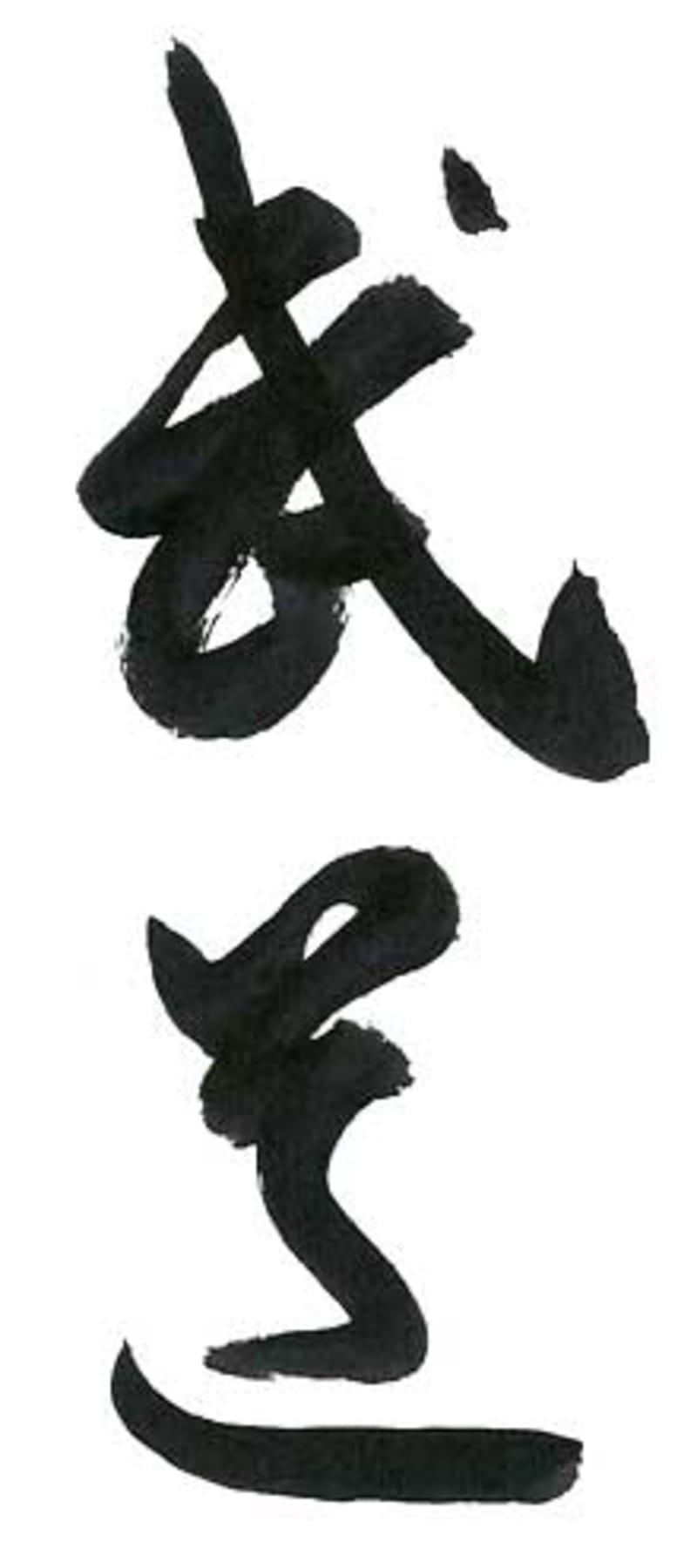
Budo (武道) — composed of Bu (武, the martial, warrior-related) and Do (道, way, path) — is the philosophical dimension of the Japanese martial arts. It describes the transformation of Bujutsu — pure war technique, developed for battlefield survival — into a way of life: a daily discipline that forms character, not merely the body.
The decisive insight: in Budo, the goal is not victory over the opponent. The goal is the continuous improvement of oneself. Every technique, every training session is an interrogation of one’s own limits — physical, psychological, ethical. The opponent in the dojo is a mirror, not an enemy.
This paradigm shift — from Bujutsu to Budo — unfolded in Meiji-era Japan (1868–1912), as the samurai age ended and Japanese society modernised. Educators like Jigoro Kano (Judo) and Gichin Funakoshi (Karate) crystallised the new formula: combat technique as a vehicle for the formation of the whole person.
Origins: From Bujutsu to Budo
Bujutsu (武術, martial art/technique) was the pragmatic combat skill of the samurai: killing effectively, surviving, protecting one’s lord. Sword, spear, archery and horsemanship were tools of war — and became obsolete with the end of the warrior era.
The Meiji transformation (1868–1912): As Japan dissolved its feudal structure to become a modern nation, the martial arts faced an identity crisis. Kano Jigoro resolved it elegantly: he reformed Jujutsu into Judo — not as military preparation, but as a pedagogical instrument. The dojo became a school of life.
1895 — Dai Nippon Butokukai: The Great Japan Martial Virtue Association was founded to preserve and standardise traditional martial arts. For the first time, kata, grading systems and ethical principles were formalised.
The Do suffix as programme: The renaming of many martial arts followed this logic: Jujutsu → Judo, Kenjutsu → Kendo, Aikijujutsu → Aikido, Karate → Karate-do. The Do was not a cosmetic addition — it was a philosophical reorientation.
The Structure of the Way
| Level | Term | Meaning |
|---|---|---|
| 1 | Jutsu (術) | Technique, craft, means to an end |
| 2 | Do (道) | Way, process, self-development |
| 3 | Michi (道) | Deeper path; spiritual dimension |
These three stages describe not a hierarchy of martial arts, but of the practitioner: beginners learn Jutsu — how does a throw work? Experienced practitioners encounter Do — what does training do to me? Masters touch Michi — what does this art mean in the context of a whole life?
Core Principles of Budo
Shugyo (修行) — Ascetic, intensive practice over a long period. Shugyo is not comfortable — it demands the person to their limits. Only at this limit does growth occur. No Budo without Shugyo.
Rei (礼) — Bow, ceremony, respect. The form of Budo (etiquette, dojo rules, bows) is not an afterthought — it is the training. One who is courteous in the dojo practises courtesy as a skill.
Musubi (結び) — Connection, union. In combat, Musubi is the ability to connect with the opponent’s energy rather than fight against it. As a principle: the aspiration toward harmony with the situation.
Bunbu Ryodo (文武両道) — The dual path of martial arts and literature. Complete education includes both. A warrior who cannot read is blind to the world he is meant to protect.
Shu-Ha-Ri (守破離) — The three stages of mastery:
- Shu (守): Preserve the form — learn techniques exactly as the teacher demonstrates
- Ha (破): Break the form — understand the principles behind the technique and adapt
- Ri (離): Leave the form — what has been learned is so internalised that form becomes unnecessary
Budo in Practice
The concrete Budo routine is unspectacular: wake early, go to the dojo, practise the same techniques again and again. This very repetition is the heart of the matter. The Japanese concept of Keiko (稽古, practice through repetition) is grounded in the conviction that character is formed through consistent action — not insight.
The Dojo (道場, place of the way) is more than a sports hall. It is a social space with clear hierarchy (Sempai/Kohai — senior/junior) and a silent contract: I entrust my body to my partner. This mutual vulnerability creates a unique form of respect.
Connections to the Martial Arts
Budo is the overarching principle connecting all Japanese martial ways:
- Judo — Kano’s explicit Budo formulation: Seiryoku Zenyo (maximum efficiency) and Jita Kyoei (mutual welfare) as Budo values
- Aikido — Ueshiba’s most radical Budo vision: total transcendence of enmity; combat as love
- Kendo — “Sword-way” as the most transparent Do formulation; Kendo kata as living ethics
- Kyokushin — Oyama’s Budo demands physical absolutes; a sharp contrast to the “gentle way” yet with the same philosophical foundation: self-transcendence through intense Shugyo
Today — Budo in the 21st Century
Budo is global. In over 190 countries, people practise Judo, Kendo, Karate, Aikido — and most of them have no martial intention. That is exactly what Kano intended.
Tension: Sport vs. Budo. Olympic Judo competition and the Budo ideal stand in permanent tension: when victory becomes the primary goal, what remains of the way? The question is legitimate — and is vigorously debated within martial arts communities.
Answer: Many Budo teachers distinguish between Keiko (practice as its own end) and Shiai (competition as a test). Both have their place — but Budo begins and ends in Keiko.
Related Articles
- Bushido — The ethical code that Budo carries
- Mushin — The mental state that Budo cultivates
- Zen in Budo — The Buddhist root of the Do concept
- Judo — Kano’s Budo formulation as a world movement
- Shu-Ha-Ri — why the final stage of learning does not mean freedom
- Reigi — the bow as a protocol, not as decoration
- Shoshin — a term from nō theatre rather than from martial arts
- Keiko Fukuda — where the claim gets uncomfortable: nineteen years at the same grade, by rule
- Edith Garrud — the open question: what the claim is worth once the art becomes a political instrument
- Dō and Jutsu Compared — the dates of the four pairs sharpen when the renaming actually happened
- Wu De — the same two characters 武徳 became the name of the Butokukai in Japan
- Shorinji Kempo — a budō registered as a religious body — and what follows from that
Further Reading
As an Amazon Associate I earn from qualifying purchases. This costs you nothing extra.