Iaijutsu — The Art of Drawing the Sword
Iaijutsu is the Japanese art of sword drawing — the decisive first cut from the scabbard, systematized by Hayashizaki Jinsuke in the 16th century.
Lineage
Derived
Contents
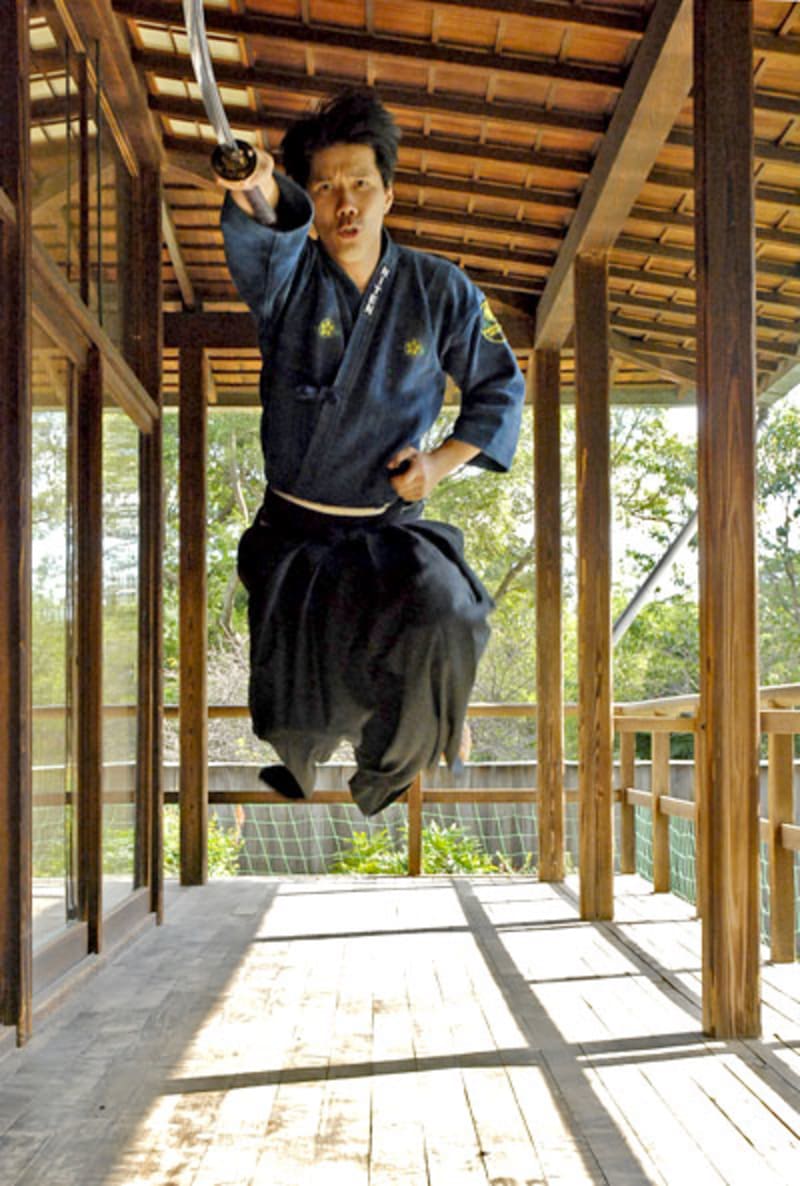
Iaijutsu (居合術) is the Japanese martial art of sword drawing — the art of bringing the blade from the scabbard in a single, seamless movement while simultaneously cutting. Unlike Kenjutsu, which begins with the sword already drawn, Iaijutsu concerns itself with the decisive moment before: the transition from stillness to lethal cut. The goal is to defeat the opponent in one movement — before they can draw their own blade. Historically this ability was life-critical: in moments of surprise, ambush, or sudden confrontation, the first cut decided life and death. Hayashizaki Jinsuke Shigenobu systematized the fragmented quick-draw techniques of the 16th century into a coherent school system. From his lineage emerged the two largest schools today: Musō Jikiden Eishin-ryū and Musō Shinden-ryū. Modern Iaido (without the martial Jutsu suffix) is the civilized peacetime successor to this art.
History and Founders
Although sword-drawing techniques are documented as early as the Nara period (710–794), Iaijutsu before the 16th century was not an independent system — techniques were integrated into general Kenjutsu training.
Hayashizaki Jinsuke Shigenobu (林崎甚助重信, 1542–1621) is credited as the systematizer of Iaijutsu. The tradition: his father was murdered when Jinsuke was still a child. He retreated to the Hayashizaki Myojin Shrine in Yamagata and spent one hundred days in prayer and meditation — at the end he received the complete sword-drawing system in a kind of divine revelation. He returned and killed his father’s murderer with a single drawing motion.
Whether this legend is historically accurate is uncertain — but Hayashizaki’s actual teaching lineage is well documented. From his school two main lines emerged over generations:
7th generation: Hasegawa Chikaranosuke Hidenobu (Eishin) — the most important reformer of the school, who adapted techniques from the Tachi (long field sword) to the shorter Katana and developed new Kata. The school bears his name: “Eishin-ryū.”
20th generation: Branch — Nakayama Hakudo separated from the main line and founded Musō Shinden-ryū, while the original line became known as Musō Jikiden Eishin-ryū.
Technical Foundations
Every Iaijutsu Kata consists of five clearly defined elements:
| Phase | Term | Meaning |
|---|---|---|
| 1. | Nukitsuke (抜き付け) | Drawing the blade, simultaneously the first cut |
| 2. | Furikaburi (振り被り) | Raising sword overhead in defensive posture |
| 3. | Kirioroshi (切り下ろし) | Downward cut — the main cut |
| 4. | Chiburi (血振い) | Blood removal: symbolic cleaning of the blade |
| 5. | Noto (納刀) | Returning the blade to the scabbard (Saya) |
Starting positions: Iaijutsu Kata begin from various positions — seated (Seiza, Tatehiza) or standing (Tachi) — simulating the challenge of the unexpected attack.
Three Levels of Learning
Iaijutsu is structured in three knowledge levels:
Shoden (初伝) — Initial transmission: foundation Kata, fundamental drawing techniques from sitting.
Chuden (中伝) — Middle transmission: more complex Kata, techniques from various starting positions, including the characteristic Tatehiza (kneeling half-position).
Okuden (奥伝) — Hidden transmission: the most secret and advanced Kata, passed only to worthy students.
Core Techniques
The first cut (Nukitsuke) is the heart of the system: it occurs during the drawing — blade and cut are a single movement. The left hand draws the scabbard back (Saya-Biki) while the right hand drives the blade forward. Timing and coherence decide everything.
Noto — returning the blade to the scabbard — is technically as demanding as the draw and is practiced separately for hours. An unsteady Noto betrays insufficient concentration.
Characteristics of the two main schools:
- Musō Jikiden Eishin-ryū: ground-rooted, shorter movements, more direct
- Musō Shinden-ryū: more flowing, somewhat wider range, aesthetically refined
Philosophy
Iaijutsu embodies the Bushido principle of Ichinichi Issho (一日一生) — “One day, one life”: every training session as if it were the last day. The first cut is the only one — there is no second chance.
Mushin (無心, “No-mind”) is the highest goal: in the millisecond of drawing, no thought may interfere. Planning, calculation, fear — all must be gone. What remains is pure, instinctive action.
“When the mind thinks about the sword, the sword is already too slow.” — Hayashizaki school tradition
Styles and Schools
| School | Founded | Distinctive Feature |
|---|---|---|
| Musō Jikiden Eishin-ryū | ~1590 (7th gen.) | Oldest living lineage, grounded style |
| Musō Shinden-ryū | 1915 (Nakayama Hakudo) | Reformed lineage, widespread in Japan |
| Hoki-ryū | ~1590 | One of the most original schools |
| Suio-ryu | ~1600 (Sengoku) | Broad weapon system with Iaijutsu core |
| Mugai-ryu | 1695 | Edo-period school, active in Japan and globally |
Connections to Other Martial Arts
- Kenjutsu — Iaijutsu is “the moment before”: Kenjutsu begins where Iaijutsu ends — with drawn blade
- Iaido — the modern, peacetime-oriented form; Iaijutsu techniques without the combat context, with greater focus on Zen and physical cultivation
- Aikido — Morihei Ueshiba integrated sword-drawing principles; Aikido’s empty-hand techniques mirror Iaido movements
- Naginatajutsu — parallel weapon tradition; both emphasize the decisive first action moment
Today
Iaijutsu is transmitted in small Koryu schools, often with direct master lineages to historical founders. The Zennihon Iaido Renmei (全日本居合道連盟) coordinates modern Iaido in Japan, which has millions of practitioners.
Difference Iaijutsu vs. Iaido: Iaijutsu is the historical war art — real application orientation, secret transmission, small circle. Iaido is the modern practice form — open training, grading system, large public tournament culture.
For both: the sword remains blunt (Iaito) or wooden (Bokken) — real Katana (Shinken) are handled only by advanced students under supervision.
Related Articles
- Kenjutsu
- Naginatajutsu
- Bushido
- Budo
- Dō and Jutsu Compared — the pair where nothing technical changed, because the opponent was already absent