Sōjutsu — The Japanese Art of Spear Fighting
Sōjutsu is the Japanese art of spear fighting with the Yari — the dominant weapon on medieval battlefields, today preserved in a handful of rare Koryu schools.
Contents
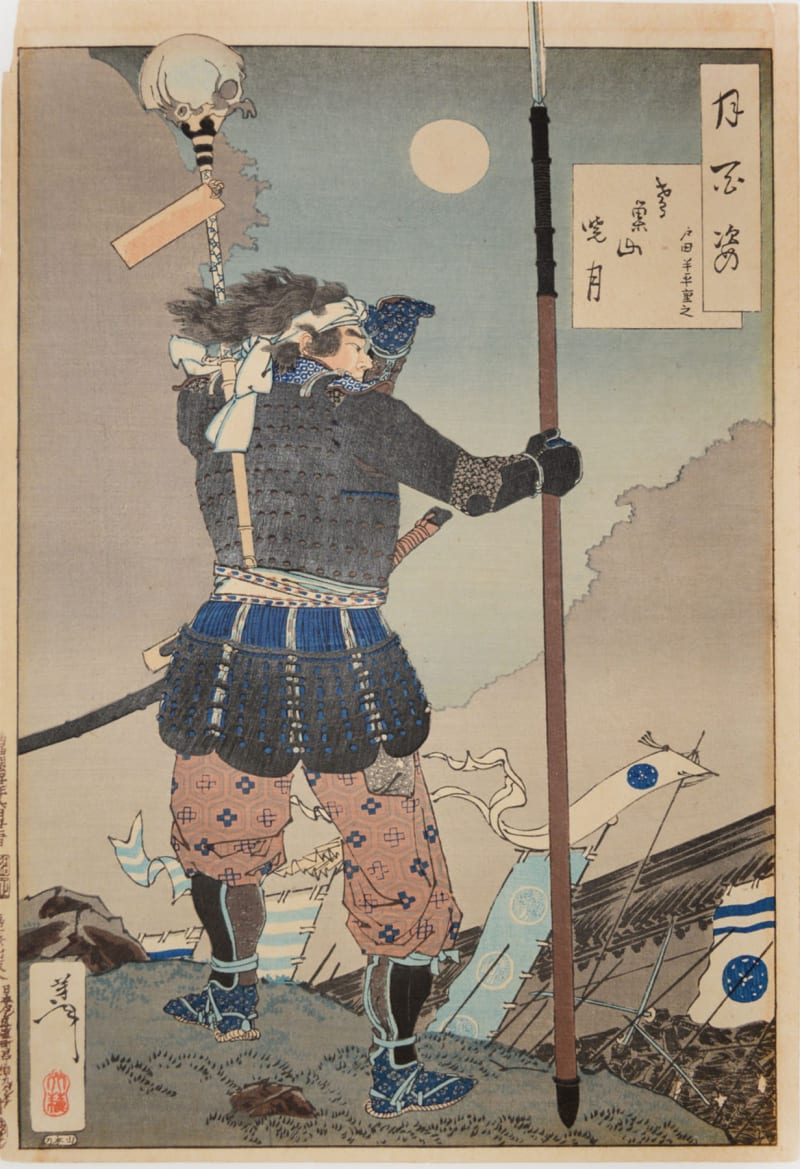
Sōjutsu (槍術, “art of the spear”) is the Japanese martial art of the Yari — the straight Japanese spear. On the battlefields of feudal Japan, the Yari was the dominant weapon: cheaper to produce than a sword, requiring less individual training, ideal for mass formations of foot soldiers (Ashigaru). While the Katana defines the samurai in popular culture, on actual battlefields it was often the spear that decided wars. In the Sengoku era (1467–1615), thousands fought with meters-long Yari in tight formations — a tactic directly influenced by Chinese and Korean military models. With the end of the warring period, Sōjutsu transformed from battlefield technique to Koryu martial art: spiritually deepened, technically refined, carefully preserved in small schools. Today only a few active Sōjutsu schools exist — it is one of the rarest Japanese martial arts.
History
The Yari reached Japan from China, initially in early forms that Japanese craftsmen redesigned and refined. The earliest clear historical evidence of Sōjutsu as an independent art dates from the 14th century.
The Sengoku era (1467–1615) was Sōjutsu’s apex. Warlords like Oda Nobunaga perfected the long spear (Nagayari) formation as tactical weapon against cavalry: rows of foot soldiers with 5–6 meter spears could break cavalry charges — a revolution in Japanese warfare.
Spears grew longer as warfare continued: simple spears of 2–3 meters at the outset grew to Nagayari of 5–6 meters for greater reach against mounted opponents.
Significant early school: Hōjōin-ryū, founded by the monk Hōjōin In’ei (宝蔵院胤栄, ~1521–1607) of Kofukuji Temple in Nara. As both monk and spear combat artist, In’ei developed the characteristic Jumonji-Yari (cross-shaped spear with sickles) and laid the foundation for one of Japan’s most renowned spear schools. The tradition holds he received his inspiration from the reflection of a crescent moon on a pond — from which he derived the cross-shaped blade form.
Owari Kan-ryū — founded by Tsuda Gonnojo Nobuyuki (in 1671, at age 16 following a spiritual enlightenment). The school is known for the unique Kuda-Yari: a spear with a metal tube (Kuda) on the shaft that creates a circular spiral motion (Engetsu principle) on the thrust, generating focused penetrating force that reaches armor gaps a straight thrust would miss.
Technical Foundations
The standard Yari (Su-Yari / Choku-Yari) has a wooden shaft of 180–400 cm and a symmetrical, straight blade of 15–45 cm. Variants:
| Type | Feature | Application |
|---|---|---|
| Su-Yari (直槍) | Simple straight spear | Standard weapon, mass formation |
| Kagi-Yari (鍵槍) | Spear with hook | Disarming, pulling riders from horses |
| Jumonji-Yari (十文字槍) | Cross-shaped spear | Versatile, Hojoin-ryu specialty |
| Nagayari (長槍) | Long battlefield spear (5–6 m) | Formation combat against cavalry |
| Kuda-Yari (管槍) | Spear with metal tube | Owari Kan-ryu specialty, spiral thrust |
Core Techniques
Fundamental Sōjutsu movements:
- Tsuki (突き) — straight thrust: the most fundamental technique, directed at vital points
- Kiri (切り) — cut: with the sharpened blade edge
- Harae (払い) — deflect / sweep: deflecting the opponent’s weapon
- Uchi (打ち) — shaft strike: the massive wooden shaft used as striking weapon
- Nage (投げ) — spear throw: rare, but part of some schools
The Engetsu principle (Owari Kan-ryū) — “Full Moon”: the thrust with the Kuda-Yari follows a small circular motion that causes the tip to rotate at impact. The spiral effect penetrates armor gaps that a straight thrust would miss.
Katachi (形) — school-specific Kata: each school preserves its techniques in partner Kata. The Kata simulate both individual duels and battlefield scenarios.
Philosophy
Sōjutsu in the Koryu tradition is not competition-oriented — it is Budo: martial art as a path of self-cultivation. The long spear demands extraordinary body control, spatial awareness, and cooperation with the training partner in Kata.
The humility of the spear: unlike the sword (symbol of samurai status), the Yari was the weapon of common warriors. Sōjutsu is therefore not an aristocratic martial art — it is the art of the battlefield, pragmatic and grounded.
“The spear is the weapon that lies least. It comes straight and hits or does not hit.” — Hojoin-ryu teaching tradition
Styles and Schools
| School | Founded | Founder | Distinctive Feature |
|---|---|---|---|
| Hōjōin-ryū | ~1560 | Hōjōin In’ei | Jumonji-Yari, temple origin |
| Owari Kan-ryū | 1671 | Tsuda Gonnojo Nobuyuki | Kuda-Yari, Engetsu principle |
| Tenshin Shoden Katori Shinto-ryū | ~1447 | Iizasa Ienao | Sōjutsu within a complete system |
| Kashima Shin-ryū | Muromachi | — | Sōjutsu as part of the combat system |
Connections to Other Martial Arts
- Naginatajutsu — closest sister art; both are polearm weapons with similar fundamental movements, but characteristically different (Naginata: curved blade at end; Yari: straight, symmetrical)
- Kenjutsu — many Koryu schools taught Sōjutsu and Kenjutsu as a unit; Tenshin Shoden Katori Shinto-ryū is the prime example
- Ninjutsu — Sōjutsu is among the 18 Ninjutsu disciplines
- Bajutsu (mounted combat) — spear and horse were closely linked; many Sōjutsu techniques derive from mounted combat
Today
Sōjutsu is one of the rarest Japanese martial arts. Few schools exist actively; Hōjōin-ryū and Owari Kan-ryū are the best-known living traditions.
Tenshin Shoden Katori Shinto-ryū — the oldest preserved Japanese martial arts school — contains Sōjutsu as an integral component and is present in Japan and internationally.
In modern Budo, Sōjutsu has virtually no competition format — unlike Kendo or Naginata. It remains almost exclusively traditional Kata practice in Koryu schools.
Criticism: The small number of active schools makes Sōjutsu an endangered cultural heritage. With the death of each master without fully trained successors, centuries of knowledge are lost. The Japanese government has designated Koryu arts as “Intangible Cultural Heritage,” but practical support remains limited.