Crosscutting
Connections, comparisons and cross-genre themes.
22 articles

Myanmar (historically: Burma) ·Pagan Empire (1044–1287); flourished: Burmese-Siamese Wars (16th–18th century)
Bando — Myanmar's Animal Style Martial Art
Bando is Myanmar's traditional unarmed combat system — with nine animal styles, strong defensive philosophy, and a history reaching back to the Pagan Empire of the 11th century.

England (London) ·1898–1903; rediscovery from 2002
Bartitsu — the Synthesis Lasted Three Years, Its Parts a Century
The earliest documented attempt at mixed martial arts, London 1898. The synthesis lasted three years, its components a century.
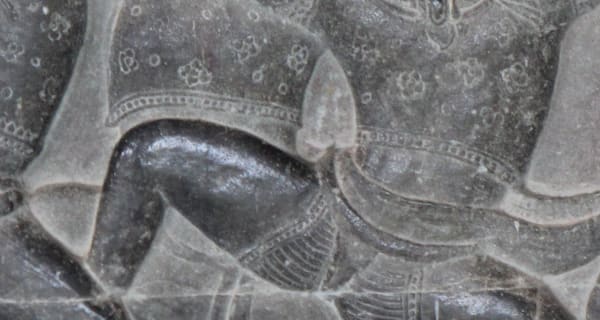
Cambodia ·Khmer Empire (9th–15th century); bas-reliefs in Angkor document practice since at least 900 CE
Bokator — Cambodia's Millennial Warrior Art
Bokator is Cambodia's oldest warrior martial art — documented for 1000 years in Angkor temple bas-reliefs, nearly extinguished by the Khmer Rouge, UNESCO World Heritage since 2022.

Brazil ·16th–18th century (slavery era); formalized 1930s
Capoeira — The Dancing Fight of the Enslaved
Capoeira is Brazil's Afro-Brazilian martial art — game, fight and dance in one, persecuted by police, now UNESCO Cultural Heritage and a symbol of cultural resistance.
Japan ·1882–1942
Dō and Jutsu — Four Pairs, and Why the Renaming Came Later Than the Story Says
Judo has carried that name since 1882, kendō only since 1920. What the four pairs of dates reveal about the renaming — and what they correct in the usual account.
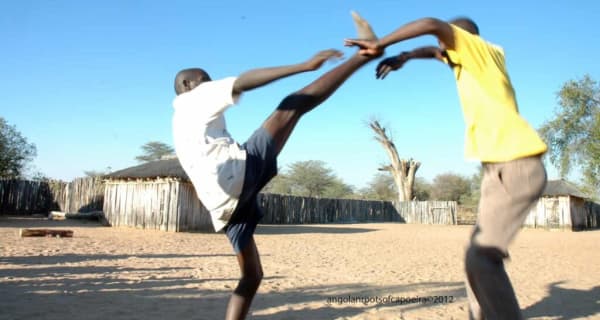
Angola ·First attested in the mid-1950s; practised until 1975
Engolo — Capoeira's Cousin, Not Its Mother
A herders' combat game from the Kunene, barely played since 1975. The story that it mothered capoeira is younger than television.
·1805–1945
From Folk Wrestling to Sport — Seven Cases, and What Separates Them
Seven folk wrestling forms became sports, between 1805 and the post-war years. What separates the cases is not when it happened but who set it off.

USA (Hong Kong as origin) ·1967 (naming); developed 1964–1973
Jeet Kune Do — Bruce Lee's Martial Art Without Limits
Jeet Kune Do is Bruce Lee's martial art — not as rigid system but as philosophy: 'no way as way, no limitation as limitation,' the most uncompromising call for authenticity in combat.

India (Tamil Nadu as origin center) ·Vedic precursors (c. 1500–500 BCE); first rules 1921; national recognition 1938
Kabaddi — India's Ancient Contact Team Sport
Kabaddi is India's ancient contact team sport — a raider must tag multiple defenders on one breath while chanting 'kabaddi' continuously, and escape before their breath fails.

India (Kerala, South India) ·Over 3000 years old (mythological); historically documented from 11th–12th century CE
Kalaripayattu — The Mother of All Martial Arts
Kerala's martial art with the flexible Urumi sword: attested from the 11th century, traced in myth to Parashurama, closely bound to Ayurveda.

Israel (origin: Czechoslovakia) ·1930s (Bratislava); IDF integration 1948; civilian version from 1964
Krav Maga — The Israeli Self-Defense System
Krav Maga is Israel's military combat system — born in the streets of Bratislava by Imi Lichtenfeld, perfected by the IDF, today the world's most widely taught self-defense system.

Mexico ·1863 (first reports); 1933 (EMLL founding, institutionalization)
Lucha Libre — Mexico's Flying Wrestling
Lucha Libre is Mexico's cultural heritage in the ring — free wrestling with masks, acrobatics, and theater, institutionalized since 1933, El Santo as immortal legend.

Brazil (vale tudo), USA (modern form) ·Vale tudo from the 1920s; UFC 1 on 12 November 1993
MMA — Mixed Martial Arts
MMA combines striking, wrestling and ground fighting under one ruleset — descended from Brazilian vale tudo, globally visible through the UFC since 1993.

South Africa (Limpopo Province, Venda community) ·Mid-19th century; documented since ~1850
Musangwe — Bare-Knuckle Boxing of the Venda
Musangwe is the traditional bare-knuckle boxing of South Africa's Venda people — practiced since the 19th century as a test of courage and rite of passage to manhood, with headbutts and knee strikes permitted.
South Africa ·Legendary: Shaka Zulu era (~1670–1820s); historically: pre-colonial
Nguni Stick Fighting — African Warrior Art of the Zulu and Xhosa
Nguni stick fighting is the traditional warrior art of South Africa's Nguni peoples — with striking stick and defensive staff, a rite of passage for youth and a living cultural practice of Zulu and Xhosa.

Greece (Antiquity) ·648 BCE (Olympic introduction); flourished 5th–4th century BCE
Pankration — The Total Combat System of Antiquity
Pankration was the ancient Greek total combat sport — introduced to the Olympics in 648 BCE, combining boxing, wrestling, joint locks, and chokes: the oldest precursor to modern MMA.

Indonesia / Malaysia / Brunei / Southeast Asia ·Centuries old; first documented references in the kingdom era (before 14th century)
Pencak Silat — The Martial Art of Southeast Asia
Pencak Silat is the martial art of the Malay archipelago — deeply spiritual, rich in regional styles, recognized as UNESCO Cultural Heritage in 2019.

Indonesia (South Sulawesi, Toraja highland people) ·Pre-colonial; practiced for centuries as harvest ritual
Sisemba — The Toraja Harvest Kick-Duel
Sisemba is the traditional harvest kick-duel of the Toraja in South Sulawesi — a communal kick-fighting ritual that settled disputes and celebrated the harvest for generations.

Russia / Soviet Union ·Historical roots: 10th century (Cossacks); modern form: Soviet era/Cold War; public: 1990s
Systema — The Russian Martial Art of Breath
Systema is Russia's mysterious special-forces martial art — based on breath control, total body relaxation, and the principle of using the opponent's force against themselves.

Egypt ·Old Kingdom (~2649–2130 BCE); continuous to present
Tahtib — Egypt's Pharaonic Stick Fighting Art
Egypt's stick fighting: depicted as a regulated contest in the New Kingdom, attested as folk practice since Ottoman times, UNESCO heritage in 2016.

Vietnam ·1938 (founding in Hanoi); development under French colonial rule
Vovinam — Vietnam's Martial Art of National Liberation
Vovinam is Vietnam's national martial art — founded in 1938 by Nguyen Loc as a tool of liberation from colonialism, built on the unified principle of hard and soft.

Iran (historically: Persia) ·Documented from the 14th c.; code of conduct Safavid (16th–17th c.); height in the 19th c. under the Qajars
Zurkhaneh — Iran's House of Strength
Iran's House of Strength: conditioning, martial arts, music and Shia-Sufi piety in one ritual. Documented since the fourteenth century.