Weapons
Sword, staff, knife — weapons systems and their philosophy.
17 articles

Japan ·Feudal Japan; systematized: early Edo period (~1605)
Bōjutsu — The Japanese Art of Staff Fighting
The Japanese art of staff fighting, made from humanity's oldest weapon. The famous victory over Musashi rests on a single source.

France ·Early 19th century (Paris); competition form: 1970s (Maurice Sarry)
Canne de Combat — French Stick Fighting
Canne de Combat is French stick fighting — developed in 19th-century Paris as self-defense for the elite, closely related to Savate, today an official competition sport.

Philippines ·Pre-14th century; first documented: 1521 (Magellan expedition)
Escrima / Arnis / Kali — The Filipino Weapon Art
Escrima is the Filipino martial art of stick, blade, and empty hand — the first martial art to prove fatal to a European conqueror (Magellan) in documented history.

India (Punjab) ·15th century (founding of Sikhism); flourished: 17th–18th century (Sikh wars)
Gatka — The Weapon Tradition of the Sikhs
Gatka is the traditional martial art of the Sikhs — with wooden staves, swords, and shields, deeply rooted in the Sikh philosophy of Miri-Piri and alive at every Sikh festival.
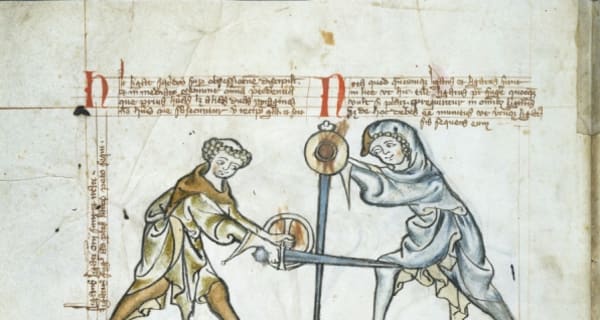
Europe (Holy Roman Empire, Italy, England) ·sources from c. 1300; the present movement since the 1990s
HEMA — the Martial Art That Admits Its Gap
The one major martial art that retrieves itself wholly from texts after a break — and for that very reason the best documented.

Japan ·Middle Muromachi period (16th century)
Iaijutsu — The Art of Drawing the Sword
Iaijutsu is the Japanese art of sword drawing — the decisive first cut from the scabbard, systematized by Hayashizaki Jinsuke in the 16th century.

Japan (Chikuzen, Kuroda domain / Fukuoka) ·Shintō Musō-ryū from the early 17th c.; Seitei Jōdō from 1968
Jōdō — an Art That Exists Only Because the Sword Does
Every jō form is an answer to the sword. The reason is not a duel but a job: the domain police had to arrest, not kill.

Portugal ·A rural practice; the Lisbon school in the 19th century; revival from the 1970s
Jogo do Pau — the Staff Built for Several Opponents
Portugal's stick fighting has two schools — one for a single opponent, one for several. They differ in everything that follows from that.

Thailand (historically: Siam) ·Ayutthaya period (1351–1767); first school 1935
Krabi-Krabong — Thailand's Weapons Martial Art
Krabi-Krabong is Thailand's traditional weapons martial art — sword and staff as core weapons, developed against Burmese invasions in the Ayutthaya era, today a living cultural heritage.

Japan ·Heian period (794–1185); first mention 712 AD in the Kojiki
Naginatajutsu — The Art of the Japanese Halberd
Naginatajutsu is the Japanese art of the halberd — originally a battlefield weapon of foot soldiers and warrior monks, later the defining weapon of the samurai woman.

Japan (Okinawa / Ryukyu archipelago) ·Ryukyu Kingdom (15th–19th century); formalized: 20th century
Okinawan Kobudo — The Weapon Arts of the Ryukyu Islands
The weapon system of the Ryukyu Islands, built from everyday tools. That weapons bans produced it is the popular telling — not the finding.

Japan ·Sengoku era (1467–1615) spread; first school ~1625
Shurikenjutsu — The Art of Throwing Blades
Shurikenjutsu is the Japanese art of throwing blades — not primarily to kill, but to distract, delay, and open defenses at critical moments of combat.

India (Tamil Nadu, South India) ·At least 4th century BCE (Sangam literature); flourished: Chera, Chola, Pandya dynasties
Silambam — The Tamil Staff Martial Art
Silambam is the Dravidian staff martial art of Tamil Nadu — over 2000 years old, documented in Sangam literature, unique in its fusion of rhythmic movement and lethal effectiveness.

Japan ·Early Muromachi period (14th century); flourished in the Sengoku era (1467–1615)
Sōjutsu — The Japanese Art of Spear Fighting
Sōjutsu is the Japanese art of spear fighting with the Yari — the dominant weapon on medieval battlefields, today preserved in a handful of rare Koryu schools.

Europe (France, Italy, Hungary) ·mask mid-18th c.; Olympic since 1896; FIE since 1913
Sport Fencing — the Line That Held, Because It Became a Sport
The European fencing line never broke. The price: almost every rule preserves a condition that no longer exists.

Japan ·Heian period (precursors); formalized: early Edo period (17th century)
Tessenjutsu — The Art of the Iron Fan
Tessenjutsu is the Japanese art of the iron fan — the samurai's most elegant solution for situations where the sword was forbidden but danger remained.

India (Manipur) ·Pre-colonial; banned 1891–1947; taken up again from 1934
Thang-Ta — Ritual, Dance and Combat, With None of Them Hiding the Others
Manipur's sword and spear art is practised as ritual, as dance and as combat — all three openly, and none of them as a disguise.